Authors:
Dorijan Šiško & Jaka Juhant
Collaborators:
Tadej Bevk, Researcher, Department of Landscape Architecture, Biotechnical Faculty, University of Ljubljana
Maj Smerkol, Researcher at Jožef Stefan Institute
Credits:
Narrative writer: Lea Sande
Music and sound design: Peter Ferlan
Textile design: Amelija Kracina
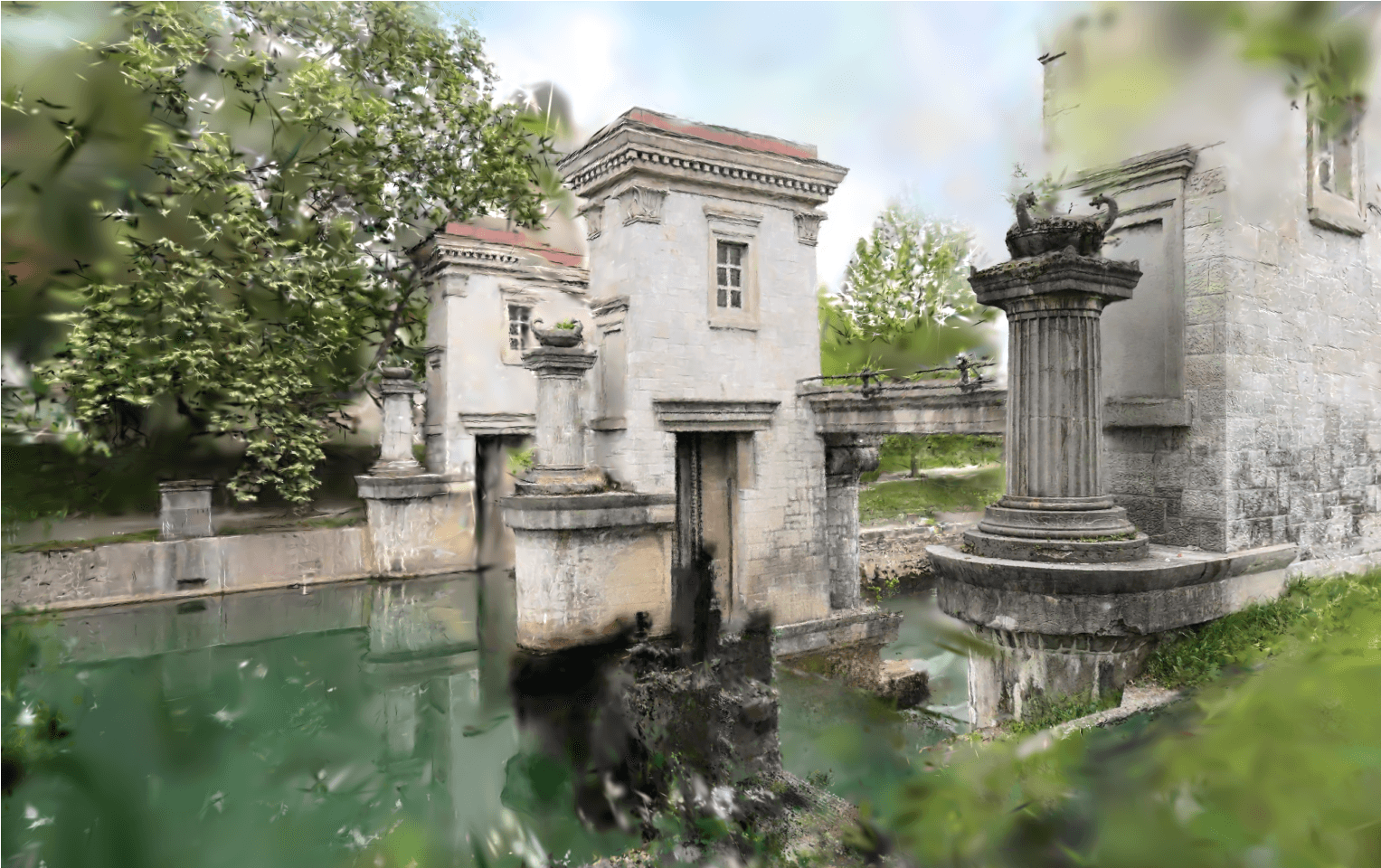
Still Water is a speculative videogame and installation in which you investigate an alien lake and its surrounding data and energy infrastructure. Through a discursive narrative structure the sentient lake guides you through a speculative world of an accelerationist dystopia with abandoned data centers, relay stations and hydroelectric plants.

The Department of Landscape Architecture at the University of Ljubljana’s Biotechnical Faculty takes an interdisciplinary approach to the study, planning and design of landscapes, bringing together ecological, social, cultural and technical knowledge to balance nature conservation and spatial development.
The Jožef Stefan Institute is the leading Slovenian scientific research institute, covering a broad spectrum of basic and applied research. The subjects concern production and control technologies, communication and computer technologies, knowledge technologies, biotechnologies, new materials, environmental technologies, nanotechnologies, and nuclear engineering.
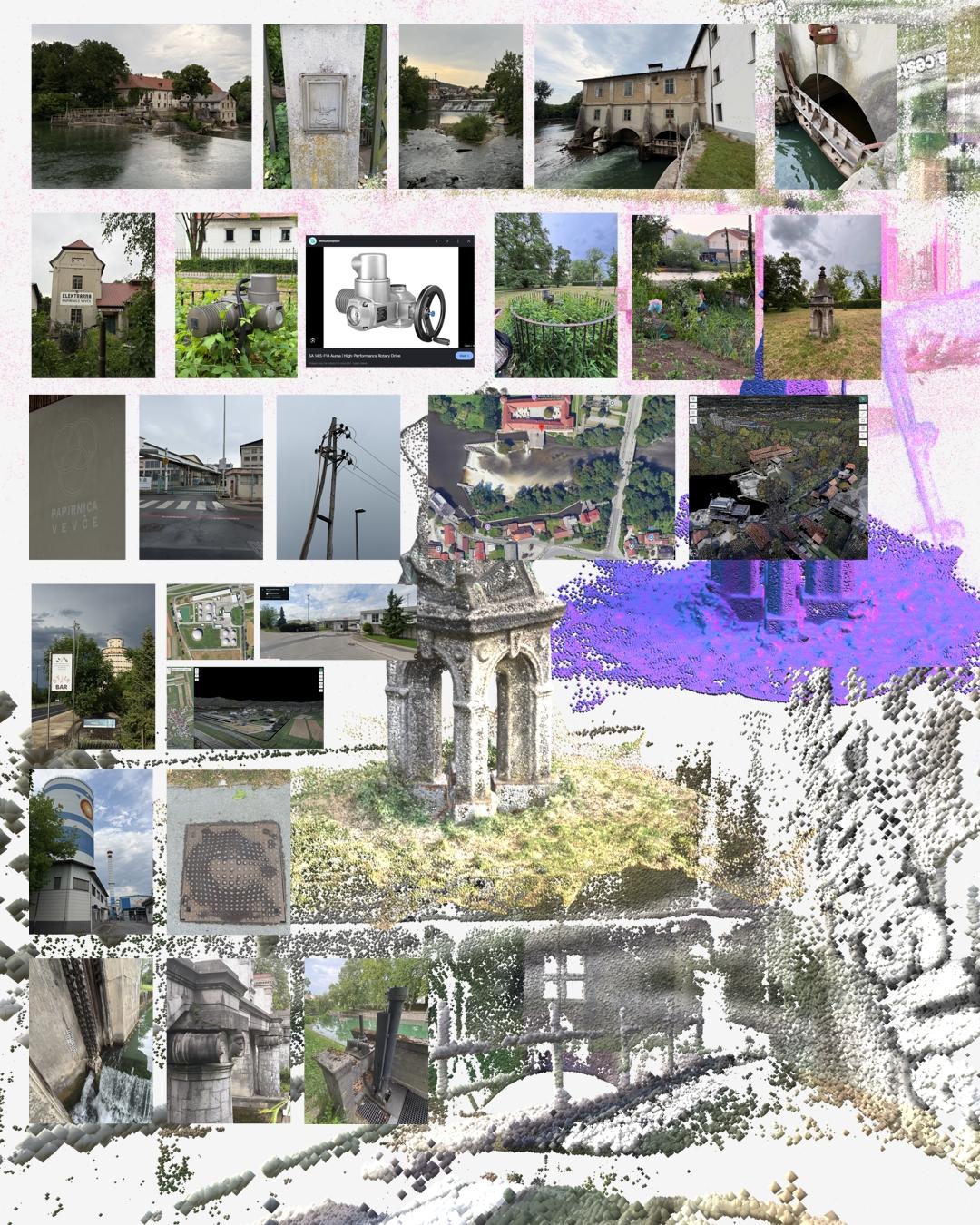
Photo: Dorijan Šiško & Jaka Juhant
Still Water is an experimental video game and installation in which the audience investigates the effects of contemporary technologies through the metaphysical metaphor of a still body of water. The player finds themselves at an unspecified time within an alternative reality, situated at an ambiguous alien lake surrounded by dystopian infrastructure. Through exploration and investigation, they gradually reconstruct the context of this world.
At the core of the experience is a sentient body of water, which has absorbed fragmented data, algorithms, and artificial intelligence systems. The lake becomes a composite consciousness, an interface through which the player uncovers the intertwined histories of energy, computation, and ecological transformation.
The virtual environment is inhabited by abandoned and deteriorating infrastructure; data center, hydroelectric plant, wind turbines, network relay stations, cooling towers, AI processing facilities that outline the technological history of a failed civilization. Through a discursive narrative structure, the player deconstructs the ideological and material foundations of this speculative world.
The locations on and around the lake further expand the project’s worldbuilding and connect to the discursive theme of “promised futures”. An unrealized utopia of renewable energy that became inconsistent with new technofeudalist advancements and the unforeseen consequences that they brought, The aesthetic of the world is abandoned and unexpectedly calm, standing in contrast to the latent violence of technological acceleration.
By using 3D scans, research materials, photography and preliminary plans for energy and data infrastructure the game collages and reconstructs real-life places into a virtual environment. Just as the real landscape has been reshaped to fit the energy and data infrastructure, the game reflects this logic through its experimental gameplay mechanics and speculative aesthetics.
The game is filled with various real life contextual references like SLAIF, Hydroelectric plant Fužine, IJS and others, which created the basis for the research based deconstruction of their infrastructural positions in the real world. The worldbuilding mirrors these places directly, like the Družimirje lake. An anthropogenic lake formed by coal mining in the region that displaced local people and submerged a village, now proposed as the site for floating solar panels, is one of the project's central landscape references.
The video game is accompanied by a post-digital totem that relays the in-game lake dialogue, alluding to the liquidity of data juxtaposed with the physicality of the infrastructure needed to make the digital tangible. By dispersing mist, the installation alludes to one of the project's central motifs: the water-based metaphors like cloud computing, data lake, mist computing. Motifs that tech companies use to obfuscate the environmental and spatial costs of digital infrastructure and which Still Water manifests back into the real.
Photo: Dorijan Šiško & Jaka Juhant