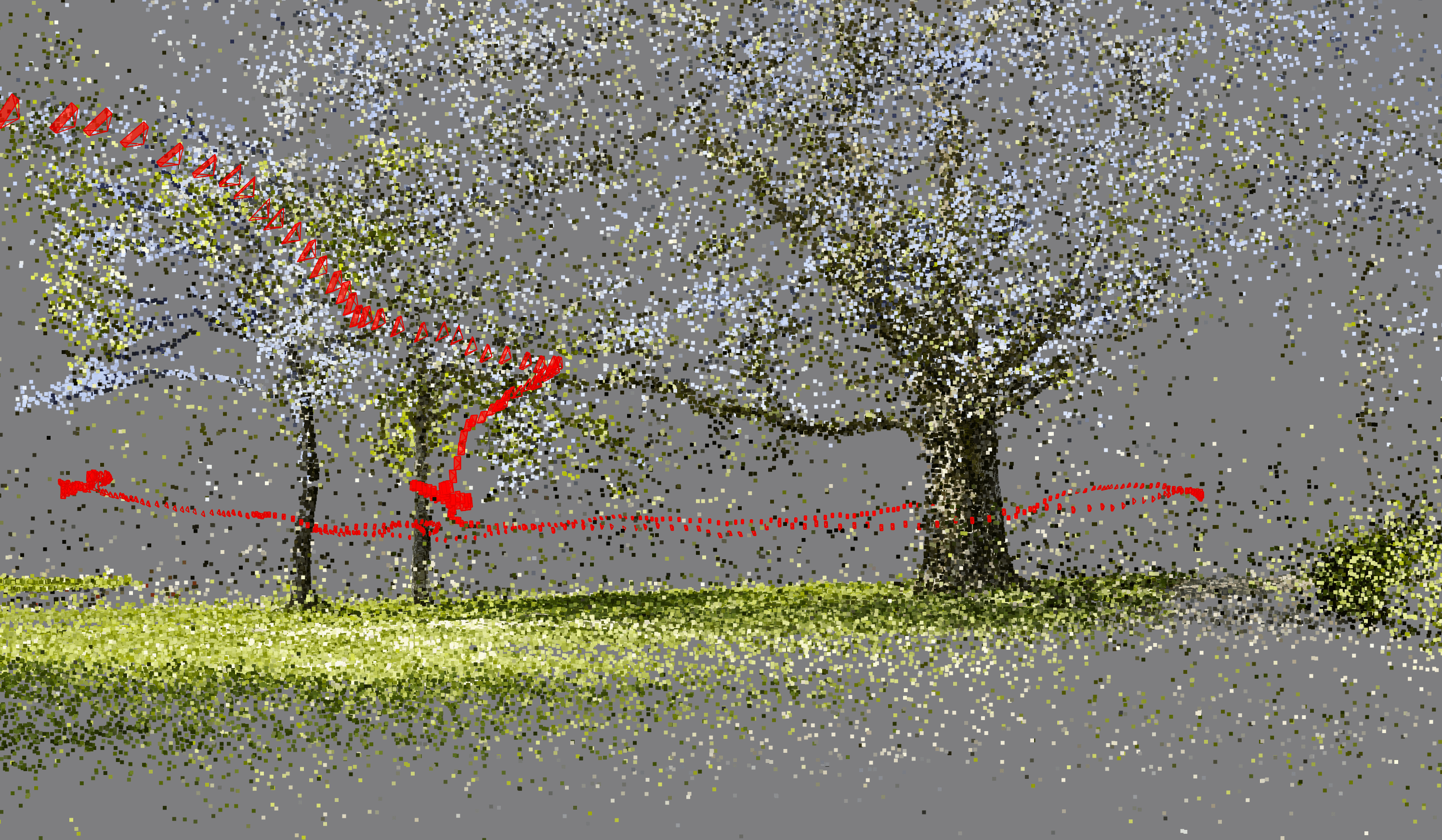
Authors:
Katjuša Rupnik, Tinkara Rakovec, Leo Larche Hitchcox
Collaborators:
Polona Hafner, researcher at the Slovenian Forestry Institute,
Domen Oven, head of forest planners at Slovenian Forestry Institute Regional Office Kranj
Miha Benedičič, forest planner Slovenian Forestry Institute Regional Office Kranj
Katarina Grabnar Apostolides , researcher at the Slovenian Forestry Institute
The system of Slovenian forestry traces back to the 18th century, when a management plan was created to secure a stable timber supply for the Idrija mine. Today, the pressure on forestry is far greater, and extreme events such as insect outbreaks, wildfires, and windthrow are becoming a new reality: automation, mechanisation, and high-tech solutions are changing forestry, foresters and the forest itself. Within this context, the project asks how extensive technological mediation affects the complexity and intelligence of forests, as well as of forestry systems?
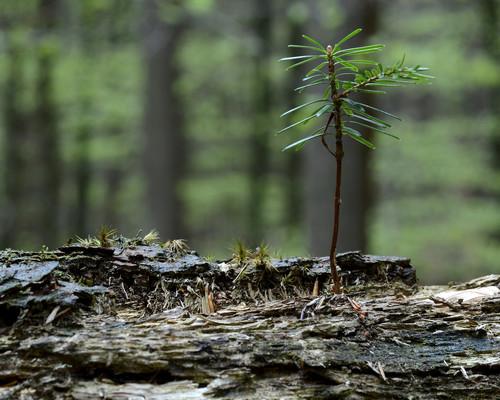
The Slovenian Forestry Institute conducts basic and applied research on forests and forest landscapes, forest ecosystems, wildlife ecology, hunting, forest management, and other uses of the resources and services forests provide.
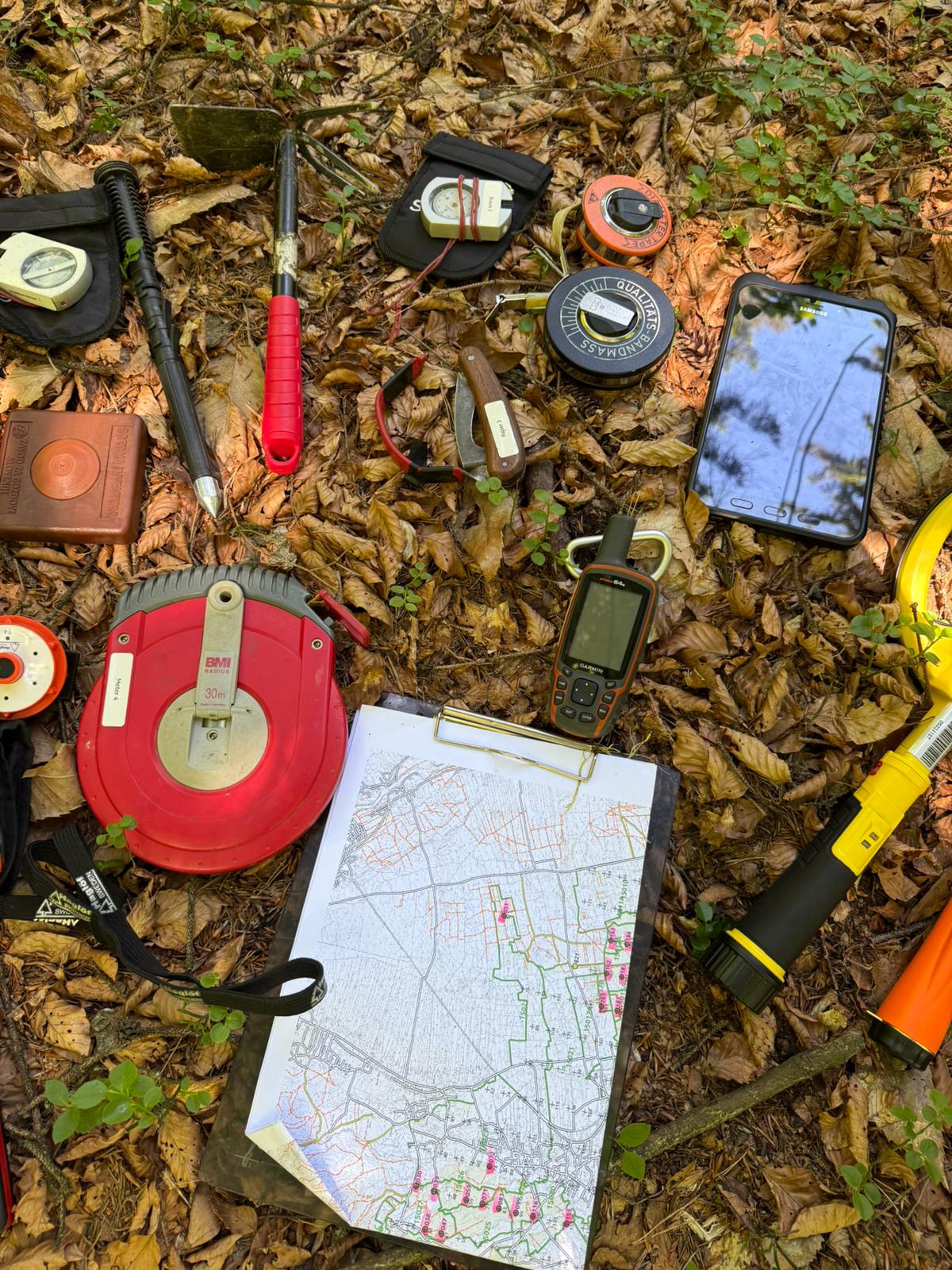
Photo: Katjuša Rupnik, Tinkara Rakovec, Leo Larche Hitchcox
Katjuša, Tinkara and Leo are a forester, an architect, and a designer with a shared interest in forests. For the past few months, they have been researching the decision-making structure of Slovenian forestry, a system that traces back to the 18th century, when a management plan was created to secure a stable timber supply for the Idrija mine. Today, the pressure on forestry is far greater, and extreme events such as insect outbreaks, wildfires, and windfalls are becoming a new reality. Answers are increasingly sought in technology: automation, mechanisation, and high-tech solutions are changing foresters, forestry, and the forest itself. Within this context, their guiding question is: how does extensive technological mediation obscure the complexity and intelligence of forests, as well as of forestry systems?
With this concern in mind, they approached the Slovenian context. Forests here are predominantly managed through selective management, which, unlike clearcutting, picks individual trees based on social structures and other processes that keep forests healthy. The governing structure plays a major role in ensuring that this method is implemented nationwide. Management is carried out mainly by the Slovenian Forest Service (ZGS), which is divided into departments responsible for different aspects of forestry and organised into 14 regional units. Each unit is further divided into districts, each overseen by a district forester. Data is the glue that holds this structure together. Collected through on-site inventories, it feeds forest plans at national, regional, and district levels, then flows back into the forest.
Just as this governance structure was designed to sustain forests in which different actors and processes contribute to their strength, Katjuša, Tinkara and Leo wanted to design a mechanism that strengthens and expands its relationships, so that it remains the complex governance ecosystem they believe it to be. This is what they hope their forestry station will be.
Katjuša, Tinkara and Leo are developing an inventory protocol that records what traditional permanent sample plots miss. In workshops, foresters and forest users who are not formally part of the system conduct an inventory on a site the team choose. Facilitated by Katjuša, Tinkara and Leo, participants reflect on the place around them while a special device records what they see and say. The resulting dialogues, both visual and audible, strengthen bonds between actors inside the system and invite outsiders to join the conversation on forest management.
Photo: Katjuša Rupnik, Tinkara Rakovec, Leo Larche Hitchcox