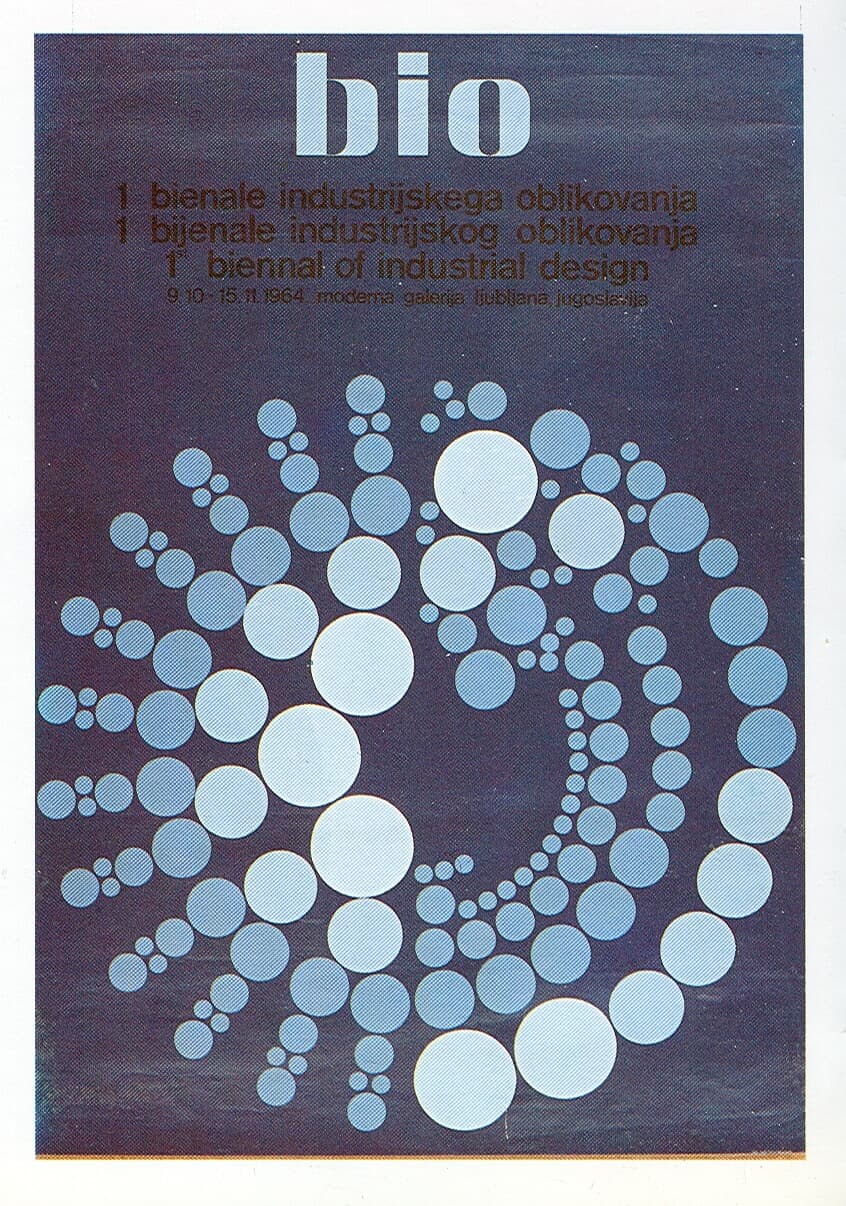
Majda Dobravec, BIO 1 poster, 1964, zbirka MAO
The Biennial of Industrial Design (Bienale industrijskega oblikovanja - BIO) emerged alongside the development of industrial design in Yugoslavia. Its founders envisioned an event where designers and business leaders could recognise the value of design for industry and commerce while simultaneously fostering collaboration between the two sectors. The exhibition was intended not only as a showcase of products, but also as a platform for promoting high-quality design and connecting designers with manufacturers.
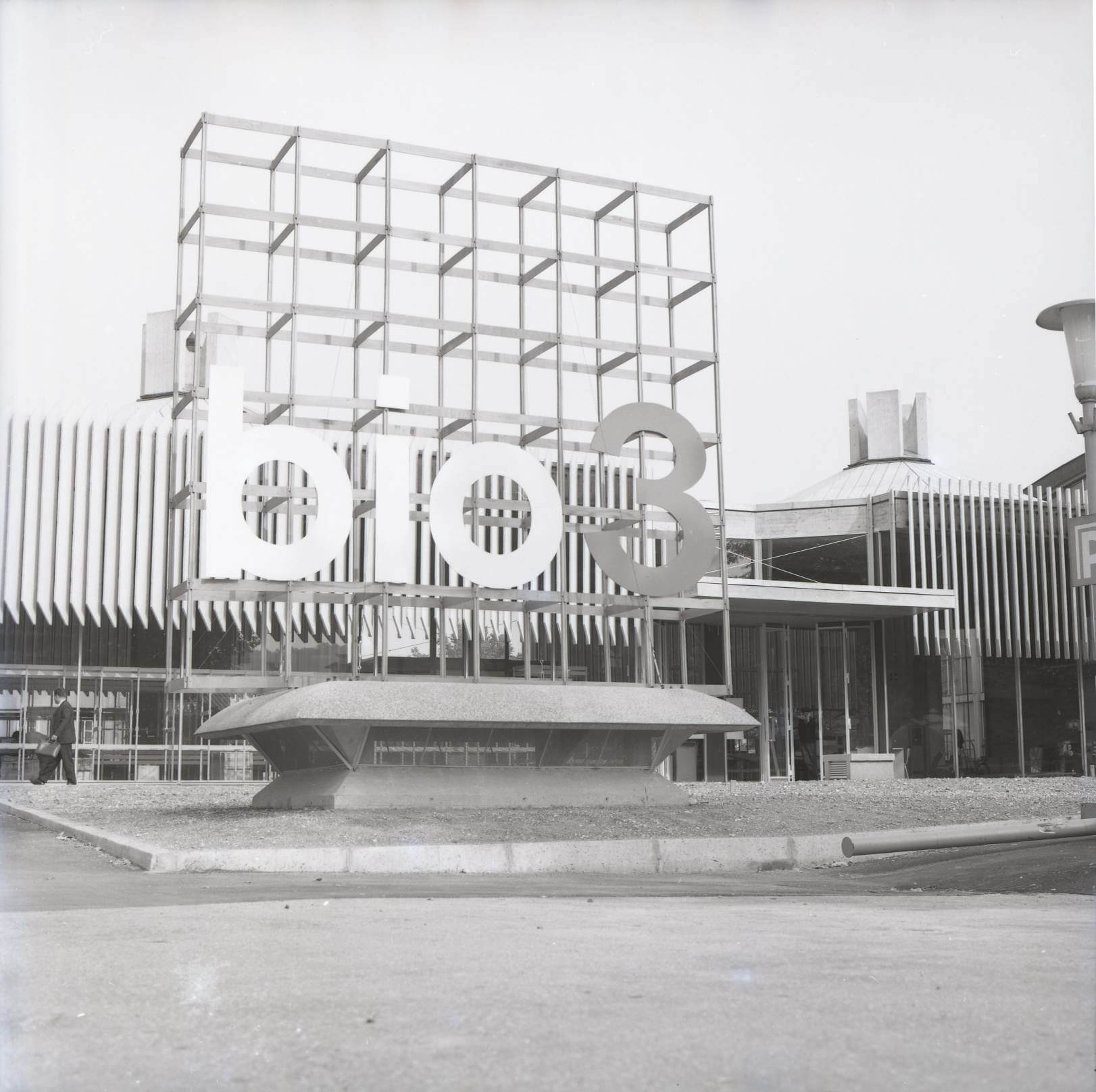
The first Industrial Design Biennial (BIO 1) was held in Ljubljana in 1964 as a Yugoslav exhibition with international participation. The exhibited objects were organised according to thematic, functional, and typological categories, as specified in the call for entries. At the following edition (BIO 2), national selection procedures were introduced, with participating works chosen by national design associations – a practice that continued until BIO 21. Nevertheless, BIO was always conceived as a place of comparison, exchange, and learning, where designers engaged with both the practical and aesthetic challenges of industry.
From the outset, collaboration with industry was fundamental. BIO sought to serve as a meeting point for designers, manufacturers, and professional audiences – a setting in which design could be evaluated in relation to production, use, and everyday life. After the first three editions, however, financial difficulties threatened the biennial’s survival. It was revived through the efforts of Stane Bernik and Matija Murko, who decided that BIO would be organised as an international event only every fourth year. This resulted in three Yugoslav editions (BIO 4, 6, and 8) and three international editions (BIO 5, 7, and 9). With BIO 10, this model was abandoned, as it became increasingly clear that a design biennial needed a continuous presence on the international stage.
Majda Dobravec, BIO 1 poster, 1964, zbirka MAO
The Biennial of Industrial Design (Bienale industrijskega oblikovanja - BIO) emerged alongside the development of industrial design in Yugoslavia. Its founders envisioned an event where designers and business leaders could recognise the value of design for industry and commerce while simultaneously fostering collaboration between the two sectors. The exhibition was intended not only as a showcase of products, but also as a platform for promoting high-quality design and connecting designers with manufacturers.
The first Industrial Design Biennial (BIO 1) was held in Ljubljana in 1964 as a Yugoslav exhibition with international participation. The exhibited objects were organised according to thematic, functional, and typological categories, as specified in the call for entries. At the following edition (BIO 2), national selection procedures were introduced, with participating works chosen by national design associations – a practice that continued until BIO 21. Nevertheless, BIO was always conceived as a place of comparison, exchange, and learning, where designers engaged with both the practical and aesthetic challenges of industry.
From the outset, collaboration with industry was fundamental. BIO sought to serve as a meeting point for designers, manufacturers, and professional audiences – a setting in which design could be evaluated in relation to production, use, and everyday life. After the first three editions, however, financial difficulties threatened the biennial’s survival. It was revived through the efforts of Stane Bernik and Matija Murko, who decided that BIO would be organised as an international event only every fourth year. This resulted in three Yugoslav editions (BIO 4, 6, and 8) and three international editions (BIO 5, 7, and 9). With BIO 10, this model was abandoned, as it became increasingly clear that a design biennial needed a continuous presence on the international stage.
Janja Lap, Marija Letnar, glasses Zloženke, exhibited at BIO 1, photo by J. Kalisnik
Bernardo Bernardi, Ber club suite, BIO 1, photo J. Kališnik
Janja Lap, Marija Letnar, glasses Zloženke
Bernardo Bernardi, Ber club suite
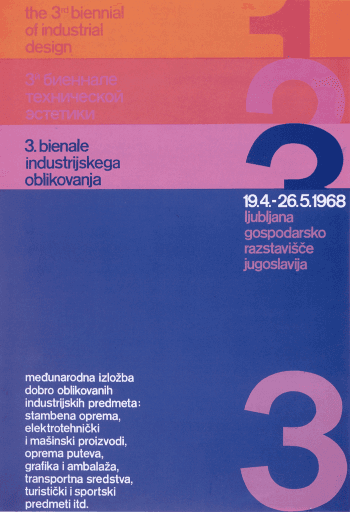
Grega Kosak, bio 3 poster, 1968
During this period, BIO continued to rely on national selection procedures in the process of assembling its exhibitions. As a result, the biennial did not always reflect the actual state of design practice, but rather the choices made by national design associations.
Despite this, BIO consistently maintained its international character and served as an important benchmark for tracking developments in industrial design.
The biennial also played a significant educational role. Its exhibitions presented industrially designed products from everyday, professional, and public environments, helping to raise awareness of design as a cultural, economic, and social practice. Through the regular organisation of biennial exhibitions, the Museum of Architecture and Design gradually built a rich archive, which today represents an invaluable resource for understanding the history of design.
During this period, BIO continued to rely on national selection procedures in the process of assembling its exhibitions. As a result, the biennial did not always reflect the actual state of design practice, but rather the choices made by national design associations.
Despite this, BIO consistently maintained its international character and served as an important benchmark for tracking developments in industrial design.
The biennial also played a significant educational role. Its exhibitions presented industrially designed products from everyday, professional, and public environments, helping to raise awareness of design as a cultural, economic, and social practice. Through the regular organisation of biennial exhibitions, the Museum of Architecture and Design gradually built a rich archive, which today represents an invaluable resource for understanding the history of design.
Grega Kosak, bio 3 poster, 1968
Janja Lap, Marija Letnar, glasses Zloženke
Bernardo Bernardi, Ber club suite
Janja Lap, Marija Letnar, glasses Zloženke
Bernardo Bernardi, Ber club suite
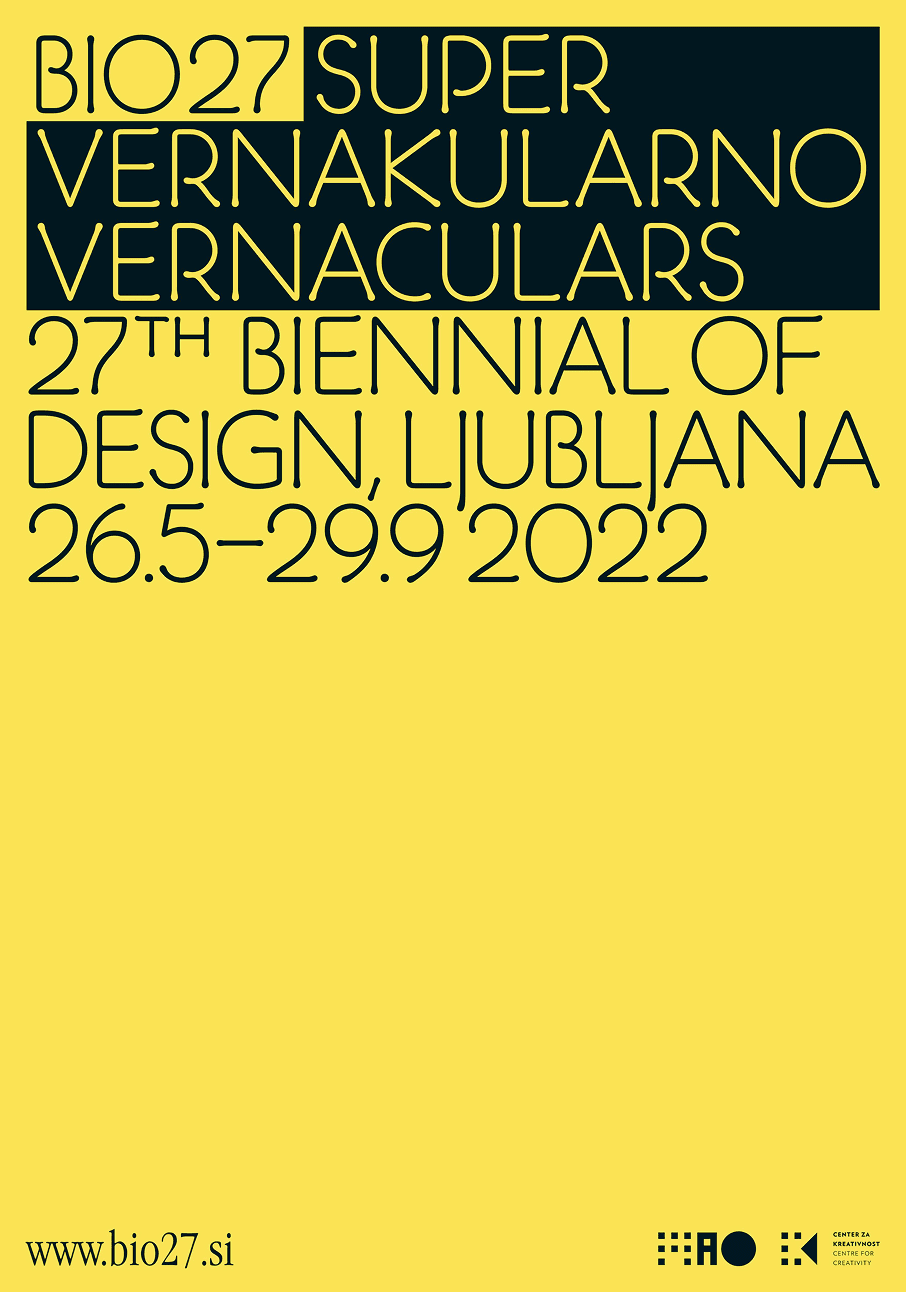
On the heels of the first ten years of the new milenium, the biennial's format began to undergo a significant transformation. BIO 21 (2008) abandoned the system of national selections and introduced an open call, making participation accessible to a far broader range of contributors. Gradually, the biennial moved away from its narrow focus on contemporary industrial design and embraced a more thematic and issue-oriented approach.
In 2011, the Industrial Design Biennial officially became the Design Biennial, a change that clearly reflected the expanding scope of the discipline. Design was no longer understood solely as the creation of objects, but increasingly as a tool for examining systems, services, processes, research, and social relationships.
BIO 23 (2012) was the first fully curated edition to adopt a thematic, problem-focused format. The emphasis shifted from showcasing individual design products to exploring design processes characterised by collaboration, experimentation, and a commitment to long-term impact. The Design Biennial opened a space for questioning everyday, overlooked, and systemic challenges of contemporary society, establishing itself as a design practice that addresses social issues and uses design research to create conditions for possible future directions and change.
BIO 50, the 24th Biennial of Design (2014) changed yet further in terms of its structure by operating as a production platform grounded in collaboration, research, and long-term strategic thinking. The focus moved almost entirely from the biennial as a static exhibition and towards the biennial as a vehicle for knowledge production, process-oriented design, collective work, and the exploration of alternatives to existing systems.
Today, BIO functions as:
a laboratory for experimental and research-driven practices,
a space for critical thinking and public debate,
a platform for interdisciplinary collaboration,
an international hub for reflecting on contemporary social, environmental, and political issues.
Today’s BIO extends beyond the exhibition format and beyond design as a standalone discipline. It operates as an open, long-term process that evolves with and alongside its time, understanding design as an active means of shaping and co-creating the future.
On the heels of the first ten years of the new milenium, the biennial's format began to undergo a significant transformation. BIO 21 (2008) abandoned the system of national selections and introduced an open call, making participation accessible to a far broader range of contributors. Gradually, the biennial moved away from its narrow focus on contemporary industrial design and embraced a more thematic and issue-oriented approach.
In 2011, the Industrial Design Biennial officially became the Design Biennial, a change that clearly reflected the expanding scope of the discipline. Design was no longer understood solely as the creation of objects, but increasingly as a tool for examining systems, services, processes, research, and social relationships.
BIO 23 (2012) was the first fully curated edition to adopt a thematic, problem-focused format. The emphasis shifted from showcasing individual design products to exploring design processes characterised by collaboration, experimentation, and a commitment to long-term impact. The Design Biennial opened a space for questioning everyday, overlooked, and systemic challenges of contemporary society, establishing itself as a design practice that addresses social issues and uses design research to create conditions for possible future directions and change.
BIO 50, the 24th Biennial of Design (2014) changed yet further in terms of its structure by operating as a production platform grounded in collaboration, research, and long-term strategic thinking. The focus moved almost entirely from the biennial as a static exhibition and towards the biennial as a vehicle for knowledge production, process-oriented design, collective work, and the exploration of alternatives to existing systems.
Today, BIO functions as:
a laboratory for experimental and research-driven practices,
a space for critical thinking and public debate,
a platform for interdisciplinary collaboration,
an international hub for reflecting on contemporary social, environmental, and political issues.
Today’s BIO extends beyond the exhibition format and beyond design as a standalone discipline. It operates as an open, long-term process that evolves with and alongside its time, understanding design as an active means of shaping and co-creating the future.
BIO 27 Super Vernaculars commission: ‘When International Style Went Local: Vernacular Modernism in Slovenia and Croatia’ Adam Štěch, 2022, installation view. Photo: Klemen Ilovar / MAO
BIO 27 Super Vernaculars commission: ‘When International Style Went Local: Vernacular Modernism in Slovenia and Croatia’ Adam Štěch, 2022, installation view. Exhibition design by Medprostor. Photo: Urban Cerjak / MAO
BIO 25 Faraway, So Close, Production Platform: Brand New Coexistence, Exhibition at MAO, photo: Delfino Sisto Legnani in Marco Cappelletti - DSL Studio
BIO 25 Curators Maja Vardjan and Angela Rui, photo: Peter Giodani
BIO 28 Production Platform: Dont Teach a Flower How to Bloom, photo: Urban Cerjak
BIO 28 Production Platform Movement for Public Speech: Installation ‘Murmuring Orchids’ at MAO. Photo: Lucija Rosc