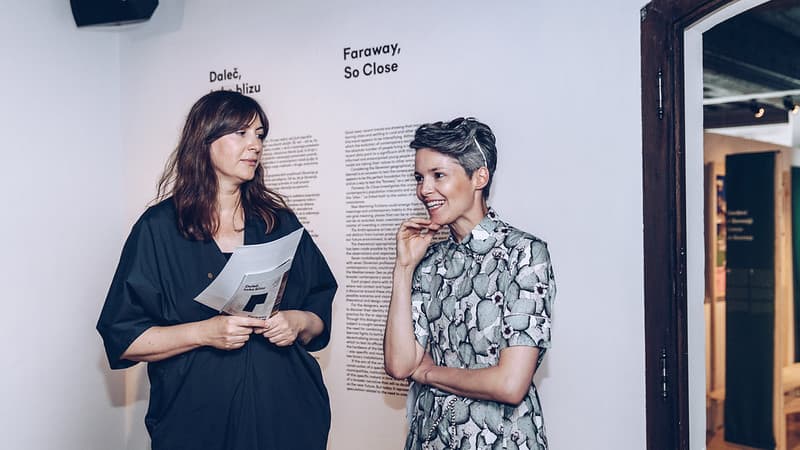
Curators Maja Vardjan and Angela Rui, photo: Peter Giodani
Curators Maja Vardjan and Angela Rui, photo: Peter Giodani
Countryside Reloaded. Photo: Delfino Sisto Legnani, Marco Cappelletti
The After Utopia Critical Set. Photo: Delfino Sisto Legnani, Marco Cappelletti
Countryside Reloaded. Photo: Delfino Sisto Legnani, Marco Cappelletti
Occupying Woods. Photo: Delfino Sisto Legnani, Marco Cappelletti
Occupying Woods. Photo: Delfino Sisto Legnani, Marco Cappelletti
Brand New Coexistence. Photo: Delfino Sisto Legnani, Marco Cappelletti
Brand New Coexistence. Photo: Delfino Sisto Legnani, Marco Cappelletti
Underground Release. Photo: Delfino Sisto Legnani, Marco Cappelletti
Resilience of the Past. Photo: Delfino Sisto Legnani, Marco Cappelletti
The theoretical appropriation of the alter-urban within the context of BIO 25 has been made possible by the decentralization of the biennial itself and also by the observations and responses of the participants. Seven multidisciplinary teams, led by international guest designers in dialogue with seven Slovenian professionals, were asked to explore precise locations as contemporary ruins, countryside, caves, forest, post-industrial sites, the Alps and the Mediterranean Sea as platforms from which to launch a discussion about our broader contemporary social condition. Each project starts with the formulation of a story, the so-called episode, where real context and hyper-fiction intersect. The overall goal is to activate a discourse around these situations, formulating questions and opening up possible scenarios and visions.
The project reflects on the Slovenian Karst underground as a huge underground network of chambers, unchanged since time immemorial, and indifferent to the mutations of the human environment. The project explores what analogous spaces contemporary environments still allow us for encounters with the materiality and immateriality of nature. The moment a natural resource enters human use, the underground finds itself at a crossroads where it can be “released” from established meanings. Based on this premise, the designers developed two scenarios, set in the man-made Lipica quarry and the naturally-formed Županova Jama (Mayor’s Cave), establishing communication between two inverted worlds. The central part of the episode is the light installation Underground Release by Dan Adlešič in Županova Jama, while the project continues with works presented at MAO and designed by Studio Formafantasma
-(800-x-533).jpg&w=3840&q=75)
Underground Release, light installation, Mayor’s Cave, Dan Adlešič; The installation set in MAO and designed by Studio Formafantasma includes: Above Ground, movie, Formafantasma with Isabella Rinaldi; One, Two, Three, Four, movie, Dan Adlešič and Eva Jäger with Isabella Rinaldi and Patrick Lawrie; An Atlas, Patrick Herron.
The project explores how forests, as a dominant part of Slovenian territory, are being returned to nature and provide an opportunity to reflect on alternative social and design practices. The project asks whether it is possible to imagine and re-enact today the social norms that formed the model of experimental communities developed at the beginning of the 20th century, and thus escape from the rationalization and standardization of so-called modern life. Central works include The Common Stove by Matali Crasset and the installation Edge Effect by Marcin Liminowicz and Pola Salicka, combining participatory processes and local community engagement. The project is complemented by films, digital contributions, and interactive interventions that expand the understanding of the forest as a platform for social connection. Through workshops, collaborations, and scenarios of collective interaction, the project opens new perspectives on sustainability, innovation, and collective creativity.
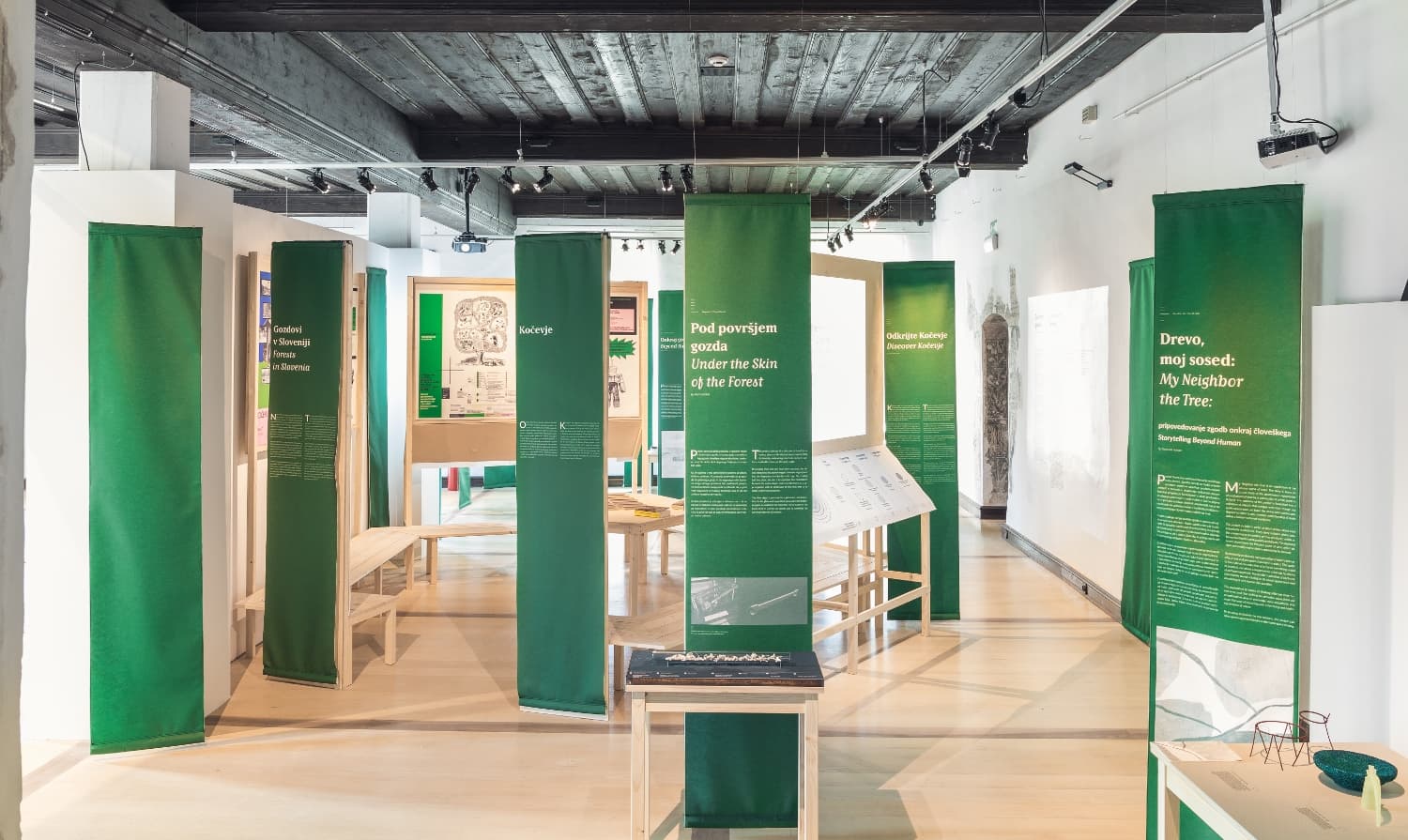
The Common Stove, wood stove, Kočevje – Rožni studenec, Matali Crasset; Edge Effect, installation, Kočevje – Mahovnik, Marcin Liminowicz and Pola Salicka; The installation set in MAO and designed by Matali Crasset includes: Discover Kočevje, Petra Bukovinski; My Neighbour Tree: Storytelling Beyond Human, Karolina Ferenc; Digital Wood, Annika Frye; Make Forest Great Again, Jurij Lozic; Under the Skin of the Forest, Martina Obid; Beyond the Wood, Daniel Riegler; Edge Effect, Marcin Liminowicz and Pola Salicka.
The project explores the idea of a potential perfect society and collective desire pushed as close as possible to the realm of reality, drawing on the example of former Yugoslavia and the creation of a new state and a new social subject through the realization of socialist society. The team led by Point Supreme takes as its case study Trbovlje, a town with a coal mining tradition and industrial infrastructure, where the collapse of Yugoslavia and the rise of the ideologies of capitalism and privatization caused the collapse of the industrial model of the factory. Rather than imagining an ideal vision for the future, the project examines the present and the hidden realities of the post-industrial town, while reflecting on the past and its utopian meanings without naïve optimism.
.jpg&w=3840&q=75)
Tiny Museum, glass pavilion, Trbovlje, Point Supreme; Just what is it that makes today’s Trbovlje so different, so appealing? billboard, Trbovlje, Ground Action; IThe installation set in MAO and designed by Point Supreme architects includes: Curtain of extraordinary beings, Point Supreme; in Trbovlje, video, Locument; Green grasses, Few Summers After, Gaja Mežnarič; Curtain Calling, video, Museo Wunderkammer; Dancing the Monument, Museo Wunderkammer; The After Utopia Critical Set, Salottobuono; Racing Suit by Dr. Bobo, Soft Baroque.
The project explores how abandoned construction sites and urban objects can acquire new meanings and functions. The starting point of a main discourse is Kiosk K67, designed in 1966 by the Slovenian architect and designer Saša J. Mächtig. Today, K67 stands as a design icon of the 20th century, a reminder of socialism and urban history, as well as a living organism capable of perpetual regeneration through new functions and vernacular mutations. The project questions how architecture, art, and memory can intertwine within the contemporary urban space. Didier Fiuza Faustino created an interactive installation emphasizing the multisensory relationship between space and the body. Installations, videos, and an interpassive machine actively engage visitors in exploring urban and architectural heritage.
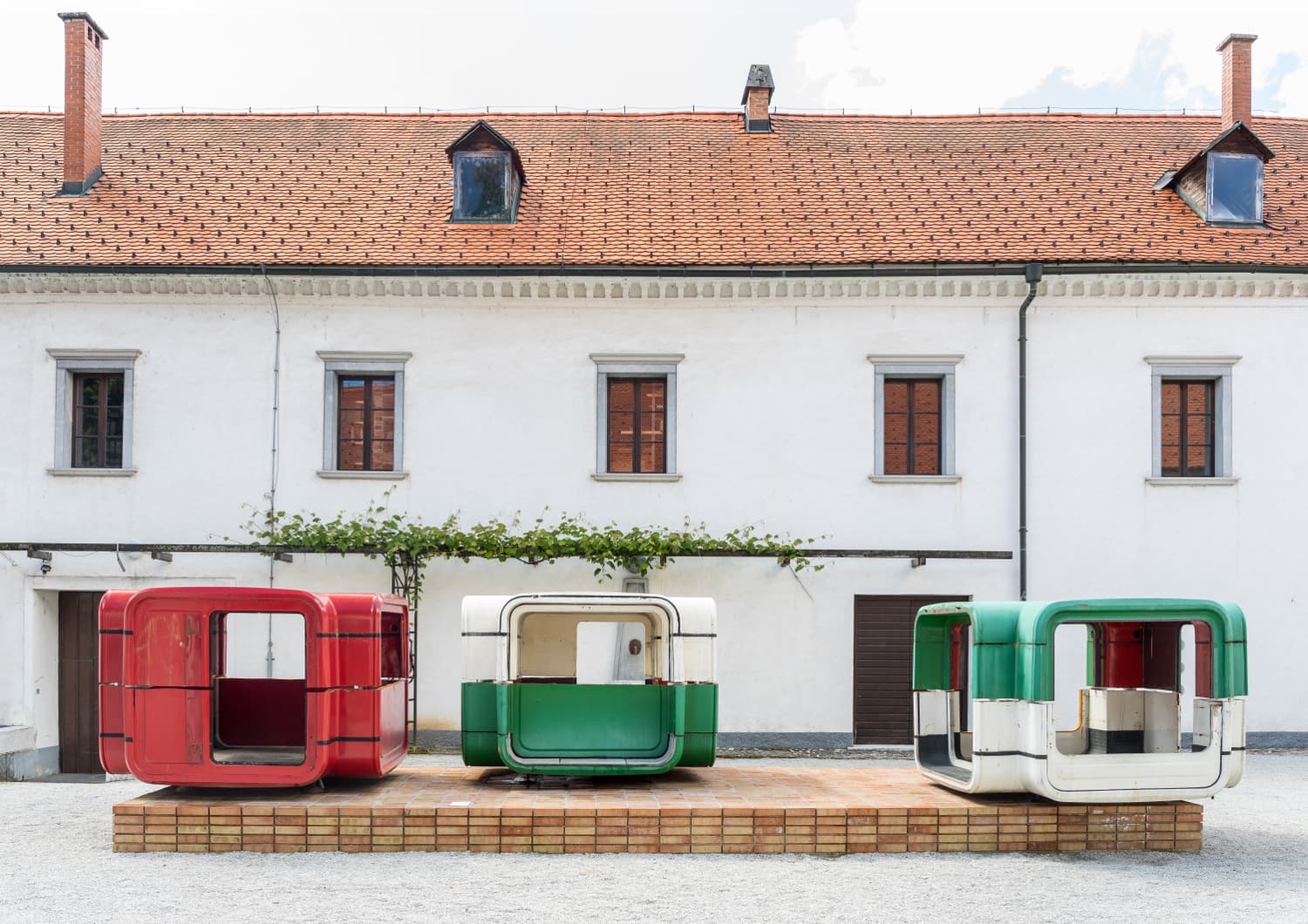
Exploring Dead Buildings 3.0, installation, Ljubljana; Didier Fiuza Faustino with Guillaume Viaud © ADAGP Paris, 2017; The installation set in MAO and designed by Didier Fiuza Faustino includes: Exploring Dead Buildings 3.0, video, Didier Fiuza Faustino © ADAGP Paris, 2017; The Interpassive Machine, Polona Dolžan, Miloš Kosec, Julien Manaira, Margarethe Müller, Lilian Pala, Simon Rowe, Nikolaj Salaj
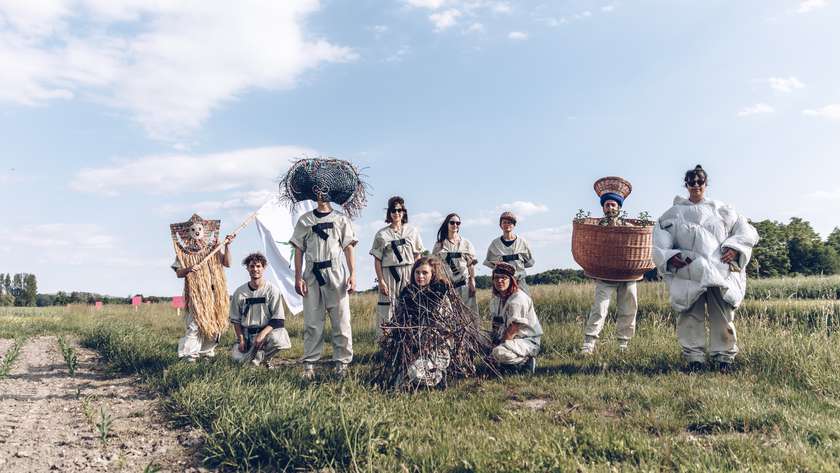
The project explores the countryside as a highly mechanized territory where automation, digitalization, and specialization often replace direct contact with nature and community. The surroundings of the village of Genterovci have been temporarily transformed into a 4 km surrealist tour, where visitors experience food production and consumption through walking, foraging, and eating. The project questions how design, art, and participatory interventions can create a space of awareness and criticism related to today’s hyper-reality of the constructed countryside. A series of installations by mischer’traxler studio actively engage visitors in exploring the contemporary countryside..
.jpg&w=3840&q=75)
Humans as Temporary Visitors in the Constructed Countryside series of installations, Lendava – Genterovci; mischer’traxler studio, Sara Brown, Lucia Massari, Nina Mršnik, Johanna Schmeer, Giulia Soldati, Jakob Travnik; The installation set in MAO and designed by mischer’traxler studio includes: Empty House, Sara Brown; Dandelion Parade, Lucia Massari in Nina Mršnik; Food Fields,mischer’traxler studio and Giulia Soldati; Highlighting Realities: Constructed Narration of the Countryside, Jakob Travnik; Autonomous Agriculture, Johanna Schmeer; Abandoned Supermarket, Giulia Soldati.
The project explores how history, the landscape, and the land itself shape contemporary understandings of the past. Studio Folder conceived the project as three chapters representing military strategies, preservation, and geomancy, with each approach responding to specific moments in time. The land becomes the pivotal element connecting resilience, traces of time, and the complexity of the land’s values. The project raises the question of how we can represent the complexity of the land’s values without oversimplifying them into the mere opposition between exploitation and preservation. Installations and visual experiments invite visitors to experience history and space through different interpretations of the land.
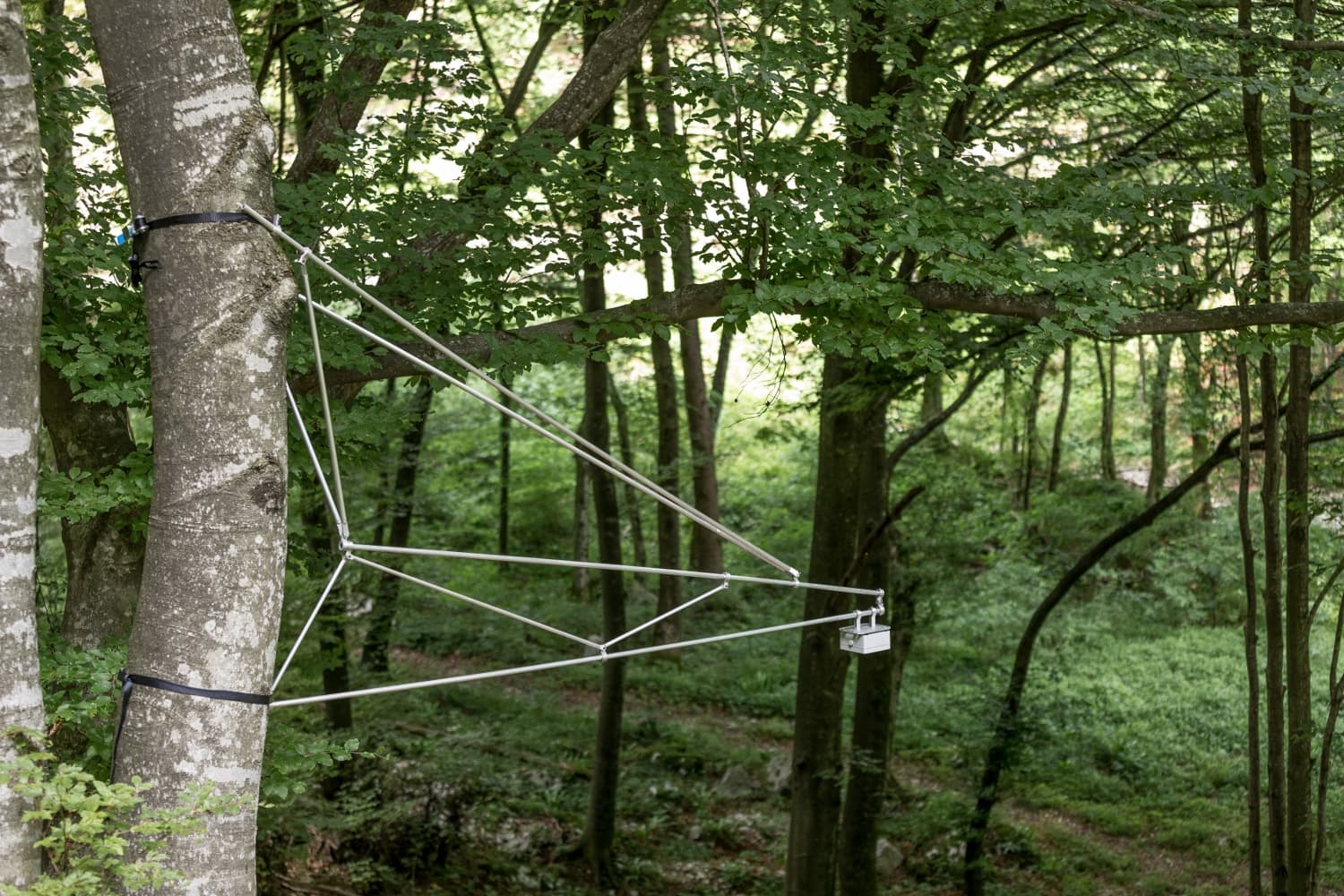
Bioacustics Landscape, installation, Kobarid, Studio Folder and GISTO; The installation set in MAO, was curated and designed by Studio Folder in collaboration with: Merve Bedir, Giulia Cordin, Gisto, Dawid Górny, Gili Merin, Monuriki, Ana Pečar, Anna Positano
The project explores the generic figure of the hero, whose endeavours involve displacements: epic journeys that today no longer take the form of a circular voyage, but rather a straight line, leading from one point to another, often with no real home left to return to. The project focuses on the complex subject of migration, heroes and their tools for survival, while raising the question of what industrial design, which is based on perpetual economic exchange, can contribute to such a delicate subject.
.jpg&w=3840&q=75)
This is a Poor / Rich State, installation, Piran – Hall Monfort, Luca Fattore in Odo Fioravanti; The installation set in MAO and designed by Odo Fioravanti includes: Æphaestus, Odo Fioravanti; untitled, video, Fabio Petronilli; untitled, video, Bolleria Industrial with Elisa Testori
Slovenian modernist glass is characterized by the harmony between its practicability and its aesthetic appearance, reflected in simple geometric lines and the absence of decor, as well as in the high quality of products created between the 1950s and the early 1980s. The exhibition, conceived by Mateja Kos and Cvetka Požar, presents the development of modernist glass design in relation to European and worldwide glass design trends and its role in establishing a quality living environment. At the same time, the historical arc of the exhibition connects tradition and modernity. Location: NARODNI MUZEJ SLOVENIJE – METELKOVA
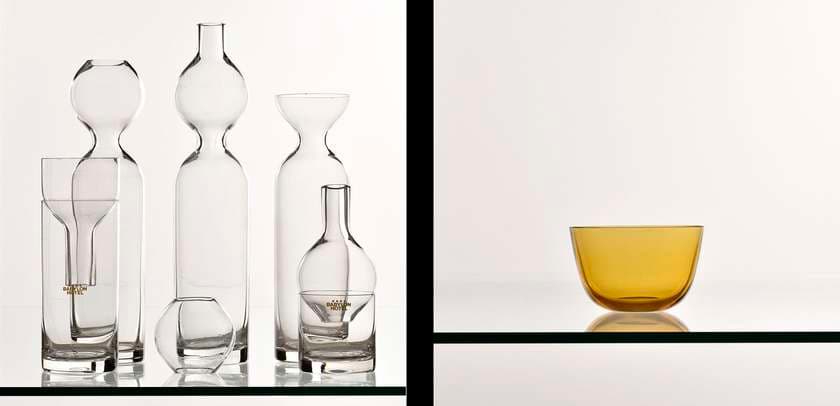
Left: Miha Kerin, Janez Koželj, Jože Krisper, 1972; right: Ljubica Ratkajec Kočica, before 1970, photo: Tanja Lažetić, 2017, National Museum of Slovenia Archive
The project Revealed Hands, organized by the Oloop collective, combines contemporary design issues with socially engaged content and brings the issue of women migrants to the forefront while exploring opportunities for social integration. The exhibition presents the results of a project developed in cooperation between the Oloop design team and women immigrants and asylum seekers from Jesenice. On display are hand-made cushions, a video documentary, and photographs showing the creative process. The project was created in collaboration with the Humanitarian Charity Society Up from Jesenice and numerous collaborators. Location: DESNI ATRIJ MESTNE HIŠE
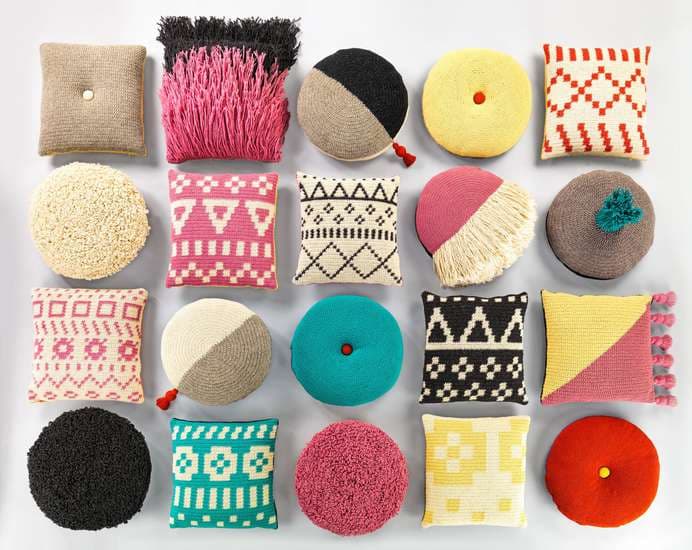
Crocheted cushions collection, Aleksander Lilik, 2015, Oloop group archive
The project Symbiocene by Gaja Mežnarić Osole and Andrej Koruza addresses non-indigenous invasive plants as one of the consequences of the domination of the human species on this planet. Through a utopian prototype of an urban ecosystem, the designers explore possibilities for new inter-species synergies, in which Ailanthus altissima (Tree of Heaven) and urban beekeeping become tools for changing competitive relations into symbiotic ones. The project opens a reflection on collaboration between species as the foundation of future ecosystems. Location: MUSEUM OF ARCHITECTURE AND DESIGN
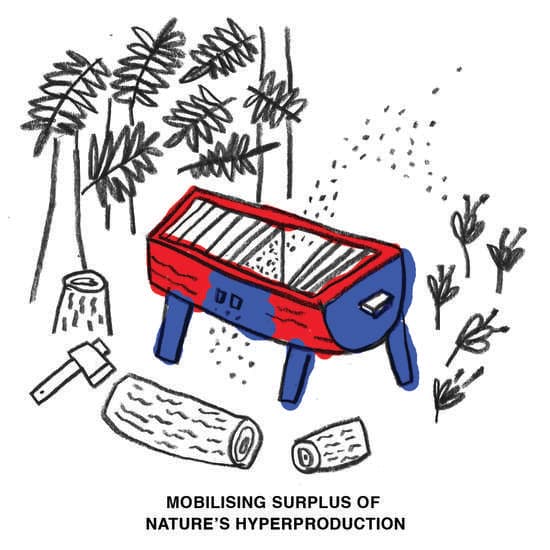
Author: Gaja Mežnarić Osole and Andrej Koruza
Exhibition presenting the ideas of an emerging generation of architects and urban planners who understand architecture as a field of critical thinking, research, and social engagement. The Closing Festival of the Future Architecture platform brings together European architects, designers, artists, and curators through exhibitions, lectures, workshops, and film screenings, opening discussions on the key challenges of the contemporary world. Special emphasis is also placed on Plečnik Year, with new research exploring the significance of Jože Plečnik’s architecture for the future. Location: MUSEUM OF ARCHITECTURE AND DESIGN
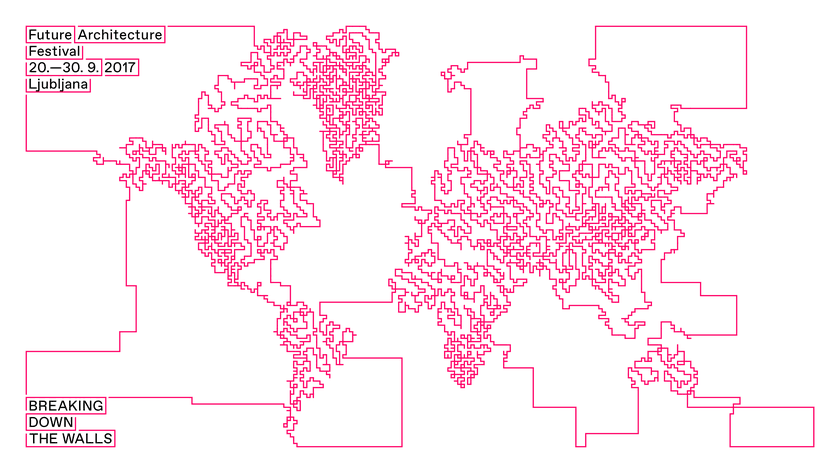
Ajdin Vašić
The workshops offer a half-day culinary experience on the episode location of Countryside Reloaded in Genterovci near Lendava. Provided by food researcher Klemen Košir and the author of this project, the workshop include tours of installations, foraging excursions to gather wild plants, and preparation of meals in an empty supermarket specially transformed for this occasion.